

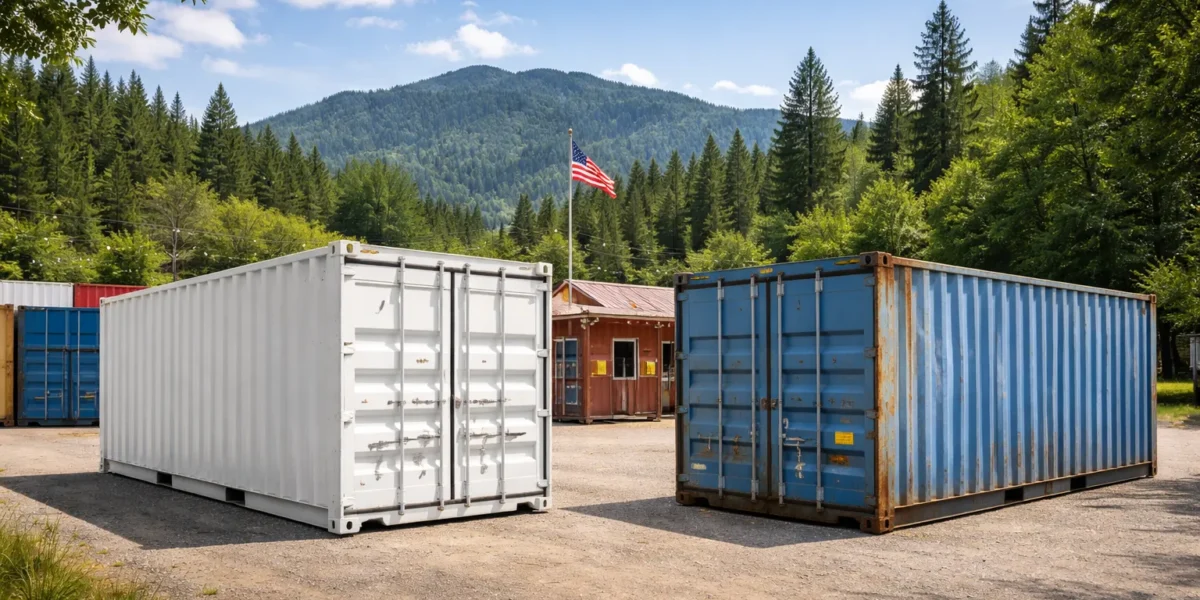
One Trip Container vs Used Container — Which One Should You Buy?
You have decided to buy a conex box. You know the size you need. But now you are staring at two very different price tags — a one trip container at $5,000 and a used container at $1,800 — and asking yourself whether the extra money is actually worth it.
This is the single most common question we hear from first-time container buyers across the United States. And the honest answer is: it depends entirely on what you plan to do with it. A one trip container is the better choice for some buyers, and a complete waste of money for others.
This guide compares one trip and used containers side by side — condition, pricing, lifespan, appearance, and the specific use cases where each one makes the most sense in 2026.
What Is A One Trip Container?
A one trip container is a shipping container that has been used exactly once. It was built at a factory — almost always in China — loaded with cargo, shipped across the Pacific Ocean to a U.S. port, unloaded, and then sold domestically. That single voyage is the only time the container has ever been used.
Because of this, one trip containers arrive in near-new condition. The paint is fresh and even. The floors are clean marine-grade plywood with no wear. The doors open and close smoothly with tight rubber gaskets. The walls have no dents, no patches, and no rust beyond the faintest surface oxidation that occurs during the ocean crossing.
In the industry, one trip containers are sometimes called new containers, single-use containers, or one-journey units. They are the closest thing to a brand-new conex box you can buy in the United States, because virtually no containers are manufactured domestically — they are all built overseas and shipped here.
The term “one trip container” alone generates over 74,000 monthly searches on Google in the USA, making it one of the most searched container terms in the country. Buyers clearly want to understand what they are getting before they commit to the higher price.
What Is A Used Container?
A used container is any shipping container that has completed multiple voyages or been in service for an extended period. Used containers come in several condition grades, and understanding these grades is critical to making a smart purchase:
Cargo Worthy (CW) is the highest used grade. A CW container has been inspected by a certified surveyor and approved for another international ocean voyage. It is structurally sound, weatherproof, and has functional doors and seals. CW containers typically have visible wear — surface rust, dents, scratches, and possibly minor repairs — but they meet the safety standards required for ocean freight.
Wind and Watertight (WWT) is the most popular used grade in America. A WWT container is guaranteed to keep out wind and rain, but it is no longer certified for ocean shipping. These units have more cosmetic wear than CW containers — heavier rust, deeper dents, welded patches, and repainted sections. For pure storage purposes, WWT is the sweet spot between price and functionality.
As-Is is the lowest grade. These containers are sold without any guarantees. They may have holes, damaged floors, broken door hinges, or severe corrosion. As-Is units are best suited for buyers who plan to cut, weld, and heavily modify the container anyway.
Side-By-Side Comparison
Here is how one trip and used containers compare across every factor that matters:
| Factor | One Trip | Used (WWT) | Used (CW) |
|---|---|---|---|
| Condition | Near new — 9/10 | Fair — 5-6/10 | Good — 7/10 |
| 20ft Price | $3,500 – $5,500 | $1,450 – $2,500 | $2,500 – $3,500 |
| 40ft Price | $4,800 – $6,500 | $1,800 – $3,500 | $3,000 – $4,500 |
| Appearance | Fresh paint, clean, uniform | Rust, dents, patches visible | Moderate wear, presentable |
| Doors | Smooth, tight seals | Functional, may need lubricant | Smooth, inspected seals |
| Floor | New plywood, no wear | Worn, possible soft spots | Worn but solid |
| Ocean Shipping | Yes — certified | No | Yes — certified |
| Remaining Lifespan | 25-30+ years | 10-20 years | 15-25 years |
| Rust | Minimal surface oxidation | Surface and possibly structural | Surface rust, no structural |
| Modifications | Ideal — clean canvas | Good — may need prep work | Good |
When To Buy A One Trip Container
A one trip container is the right choice when appearance, longevity, or structural integrity are priorities. Here are the specific scenarios where spending the extra money makes sense:
Container homes and living spaces. If you are building a container home, guest house, or Airbnb unit, you want the cleanest possible starting point. One trip containers have uniform walls with no patches or welds that could compromise insulation or interior finishing. The fresh paint and straight panels also mean less prep work before cutting windows, adding framing, or applying spray foam insulation.
Commercial and public-facing builds. Pop-up shops, restaurants, coffee bars, event spaces, and retail stores built from containers are visible to the public every day. A one trip container looks professional and modern straight off the truck. A heavily dented WWT container with rust streaks and welded patches does not.
Long-term investment. If you plan to keep the container for 20 years or more, the one trip premium pays for itself through reduced maintenance. The fresh corten steel coating has not been compromised, which means the natural weathering process that protects the container from further corrosion is intact and effective.
Office and workspace conversions. Container offices for construction sites, farms, or remote work require clean interiors, solid floors, and doors that seal tightly against dust and weather. One trip containers deliver all of this without additional repair or prep.
Resale value. If there is any chance you may sell the container in the future, one trip units retain significantly more value than used containers. A well-maintained one trip container can still fetch 60 to 70 percent of its original purchase price after five years.
When To Buy A Used Container
A used container — particularly a WWT grade unit — is the right choice when function matters more than form and budget is a factor. Here are the scenarios where used is the smarter buy:
General storage. If you need a secure, weatherproof box to store tools, equipment, inventory, furniture, or seasonal items, a WWT container does the job perfectly. You are paying $1,450 instead of $5,000 for the same basic function — a locked steel box that keeps your stuff dry.
Construction site storage. Job sites are rough environments. Containers get bumped by equipment, scratched by materials, and covered in dust. Spending premium money on a one trip container for a construction site is unnecessary when a used unit provides the same security at less than half the price.
Farm and ranch use. Agricultural operations need rugged, affordable storage for feed, tools, machinery parts, and supplies. Used containers handle these environments perfectly and farmers rarely need the cosmetic quality of a one trip unit.
Budget-conscious buyers. If you simply need a container and have a tight budget, a WWT unit offers the best value in the entire container market. At $1,450 to $2,500 for a 20ft unit, there is no cheaper way to get 160 square feet of secure, weatherproof storage space in America.
Temporary or short-term use. If you only need a container for a few months or a couple of years — a renovation project, a business transition, event storage — buying a used unit and reselling it when you are done is far more cost-effective than buying new.
Heavy modification projects. If your plan involves cutting the container apart — adding roll-up doors, cutting window openings, welding on extensions, or removing entire wall panels — there is no reason to start with a pristine one trip unit. Buy a used container and put the savings toward the actual modifications.
The Price Difference In Real Terms
Let us put the numbers in perspective for a 40ft container in 2026:
A one trip 40ft container costs approximately $5,500. A used WWT 40ft container costs approximately $2,200. The difference is $3,300.
That $3,300 saved by buying used could pay for a full set of custom modifications — a personnel door, two windows, interior lighting, and basic insulation. Or it could cover delivery plus a high-security lock system with cash left over.
On the other hand, if you are building a $40,000 container home, the $3,300 premium for one trip panels represents less than 10 percent of the total project cost — a small price for a significantly better starting point that reduces labor and prep time.
The right choice always comes down to what you are building and how long you plan to keep it.
Inspection Tips For Both Types
Regardless of which grade you choose, always verify these things before finalizing your purchase:
For one trip containers — confirm the unit is genuinely one trip and not a repainted used container. Check for uniform paint coverage, original factory markings, and a CSC plate with a recent manufacturing date. The floor should show zero wear and the door gaskets should be soft and pliable.
For used containers — check every wall and the roof from inside with the doors closed. Any daylight coming through means it is not watertight. Test both doors for smooth operation. Walk the entire floor and press down firmly to check for soft spots or rot. Ask the supplier about the container’s history and how long it has been out of ocean service.
The Bottom Line
Buy a one trip container if you are building something permanent, public-facing, or high-value — container homes, offices, retail spaces, or long-term investments where appearance and longevity justify the premium.
Buy a used WWT container if you need functional, affordable storage — job sites, farms, backyards, warehouses, or any application where the container will not be seen by the public and cosmetic condition does not matter.
Both types are built from the same corten steel, use the same ISO-standard dimensions, and will protect your contents from weather, theft, and pests. The only real difference is how much life the container has already lived — and how much that matters for your specific project.
Need help deciding? Call our team at +1 (979) 365-0023 or request a free quote at ConexBoxUSA.com/get-quote. We carry both one trip and used containers in all sizes, ready for delivery to all 50 states.
